
Screen Printing vs Embroidery vs DTF: How to Choose the Right Method
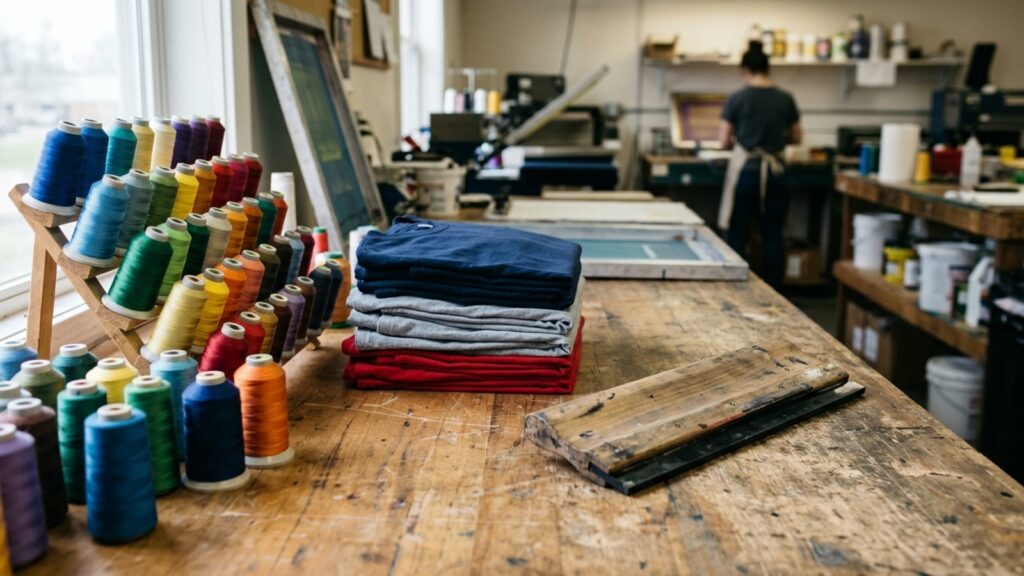
Screen printing is usually the best value for larger runs of tees and hoodies in a few bold colors, while embroidery is the better choice for polos, caps and jackets that need a stitched, premium finish. That is the short answer to the screen printing vs embroidery question. DTF transfers fill the gap between the two, putting full-color, detailed artwork on small runs and on fabrics like polyester and nylon.
We have served Albuquerque businesses, teams and organizations since 2006 and run all three methods in-house.
How screen printing works and what it does best
Screen printing forces ink through a mesh screen onto the garment. As Cooper Hewitt, the Smithsonian’s design museum, explains, parts of the screen are blocked with a stencil, ink passes through the open mesh, and a different screen is used for each color. That shapes the whole method: every color adds another screen to prepare before the first shirt is printed.
Because of that setup, screen printing is best suited to bulk orders and bold designs in solid spot colors. We print on cotton and cotton-blend tees, long sleeves, hoodies, sweatshirts, tote bags, team jerseys and workwear. With premium inks and curing equipment right here in our Albuquerque shop, our prints keep their color and edges through repeated washing.
How embroidery works and why it suits polos, caps and jackets
Embroidery stitches your logo into the garment with thread. First we digitize the logo, which means converting your JPEG or PNG into a file our embroidery machines can read, telling them exactly where and how to place each stitch. We keep that file on hand, so reorders are fast and simple.
Custom logo embroidery works especially well on thicker materials and structured garments. Our most popular embroidered pieces are performance and cotton polos, trucker hats, snapbacks, beanies, quarter-zips and workwear. It gives a premium, textured, long-lasting finish that suits uniforms and corporate apparel.
Polyester embroidery thread is built for hard use. Thread maker Madeira, for example, describes its 100% polyester embroidery thread as resistant to chlorine bleach and ideal for uniforms and safety garments.
DTF vs screen printing: how DTF transfers work and when to choose them
Direct to film, or DTF, prints a full-color design onto a special film instead of the garment. Printer maker Epson describes the process as printing on the film, applying a hot melt adhesive powder, and then transferring the image onto a garment with a heat press. Because there are no screens to make, adding colors does not add setup.
That makes DTF a strong fit for small runs, detailed artwork and mixed fabrics. Our DTF transfers press onto 100% cotton, polyester, cotton-poly blends, nylon, rayon and even leather, on tees, hoodies, hats and bags. The designs stretch with the fabric.
In short, screen printing is best for bulk orders, spot colors and long-term durability, while DTF is the versatile full-color option for many fabric types, quick turnarounds and complex artwork. If you have your own commercial heat press, you can also order our DTF transfers on their own, with detailed pressing instructions in every order.
Which fabrics and garments suit each method
Cotton and cotton blends are the easy case, since all three methods work on them. Tees, hoodies and sweatshirts in bigger runs are screen printing territory, while DTF handles the same garments when you only need a handful.
Polyester performance wear takes more care on press. Ink maker Avient notes that 100% polyester garments need a bleed-resistant ink, because dyes released from the fabric during curing can be drawn into plastisol ink and change its color. We still screen print performance fabrics, and our team will recommend fabrics that keep your design bold. DTF presses well onto polyester and nylon, and we embroider performance polos too.
Structure matters as well. Caps, jackets, fleece and heavy work shirts are where embroidery shines, and DTF transfers work on hats too. For high-visibility safety wear, we can screen print or embroider your branding directly onto the garment.
How color count and design detail change the choice
Color count is the big variable in screen printing. A logo in one or two solid colors is the most efficient to set up. Pantone color matching is available for screen printing and for embroidery thread, so your brand colors can be matched closely.
Embroidery turns artwork into stitches, and thread has real width, so very small lettering and hairline details are the parts of a logo that need the most attention. Our team knows how to adjust a logo for crisp embroidery, and we choose thread colors to match your brand guidelines.
DTF is the natural pick for full-color artwork, fine detail and lots of colors. For exact brand colors, DTF gets as close as the process allows, and we send digital proofs for approval. Whatever the method, you get a digital mockup showing placement, size and colors before production starts.
How order size changes the cost of each method
On cost, screen printing vs embroidery comes down to screens versus stitches. Screen printing carries setup for every design and every color, and that setup is shared across the order, so the more pieces you print, the lower the cost per piece. That is why larger quantities get our most competitive pricing and tiered bulk discounts, and why we may suggest DTF for only a handful of items.
With embroidery, the number of stitches sets how long each piece spends on the machine, so a large, dense design costs more to run than a small chest logo. Runs can be as small as a single monogrammed gift or as large as hundreds of hats for an event.
DTF has no screens to make. Our DTF transfers are priced by the length of film your designs take up, so cost follows print size rather than color count. That suits short runs, one-off pieces and test designs.
How well each method washes, and how to care for it
All three methods last when they are produced and cared for properly. Screen printing is our pick for long-term durability on bulk orders, and embroidery gives a long-lasting finish that handles repeated washing and job site conditions. DTF designs stretch with the fabric and won’t easily crack or fade when applied correctly and washed inside out.
Care starts with the label inside the garment. Under the FTC’s Care Labeling Rule, clothing makers and importers must attach care instructions. The rule’s glossary defines a cold machine wash as an initial water temperature up to 86°F.
For the decoration itself, our advice is the same for all three methods. Wash inside out on a cold, gentle cycle, then tumble dry low or hang dry. Skip the bleach, even though some thread resists it, and never iron directly on the print or embroidery.
Screen printing vs embroidery vs DTF for business, team and event orders
For businesses, the screen printing vs embroidery choice often splits by garment. Embroidered polos suit office staff, embroidery is what we usually suggest for rugged jackets and heavy-duty work shirts, and printed tees work well for promotional events. Your logos and approved proofs stay on file, which keeps matching a new hire’s gear simple.
For teams and booster clubs, screen printing handles bold numbers and booster tees, DTF suits intricate logos, and embroidery fits coaching polos. Send us a spreadsheet of player names, numbers and sizes, and we will take care of the roster details, as we do for Albuquerque schools and athletic departments.
For events, screen printing is the value pick for a big batch of matching tees, and DTF covers a small batch or a full-color design. Tell us your in-hands date early, since production time depends on the method and the job, and rush options depend on shop capacity.
If you’re still deciding, send us your logo, the garments you have in mind, the quantity and your date. We’ll guide you to the best method for your budget, quantity and design. You can request a quote from our screen printing services page, and we’ll point you to embroidery or DTF if either fits the job better.
